1️⃣ The Place Where YouTube Works Differently
Every view on YouTube starts with curiosity — except this one.
In Search, people don’t stumble upon videos.
They go looking for them.
This is the one place where viewers, creators, and YouTube all agree on a single thing: purpose.
It’s not about catching eyes.
It’s about being the answer.
2️⃣ Tunnel Vision: The Search Mindset
Ten minutes before upload,
you realize your video has no audio.
You search “how to fix no sound after export.”
What do you want to watch?
A 10-minute vlog about someone’s cat?
Probably not.
You instantly lose patience,
like, the video starts with: “Hey guys, welcome back to my channel! Before we dive in, here’s a quick story about how my cat discovered reverb…”
You can already feel your soul leaving your body.
Then another one begins:
“So before we start, don’t forget to like and subscribe, this will tell the algorithm I’m a good person, I’d really appreciate it, because it’ll greatly help me—”
You’re gone.
But if that’s the only video that might help,
you come back, skip around, find the answer — and leave,
because you’ve got three minutes left.
See? When options are narrowed down, the viewer has no choice.
And here’s the twist:
This is also where small channels win.
Because in this moment, it doesn’t matter how many subs you have —
all that matters is who saves them first.
That’s not marketing.
That’s rescue.
But not every search feels like an emergency.
Some are relaxed — like when people look up “funny cats”
They might just as easily click “funny dogs,” or even “funny people.”
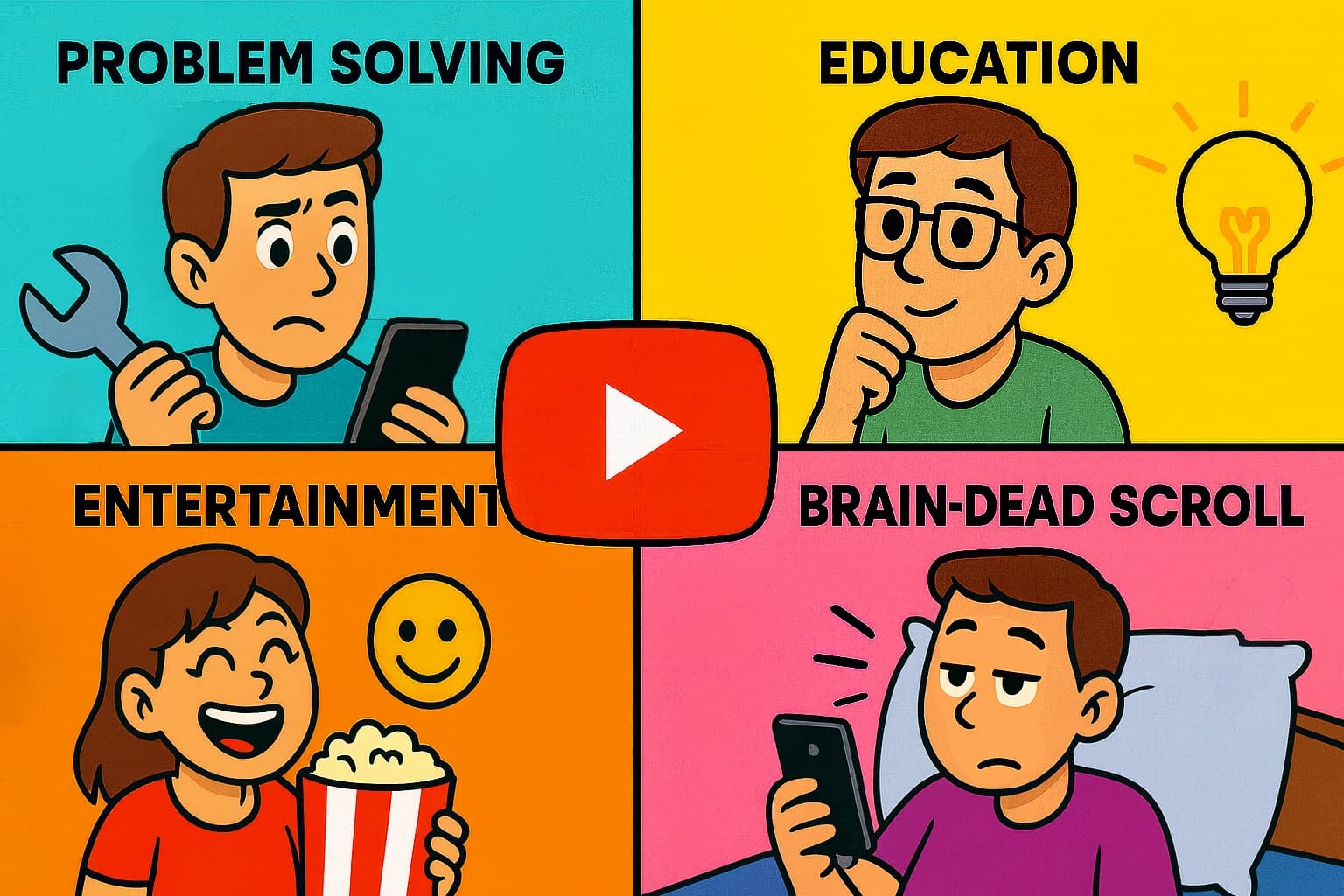
because viewers have roughly four main intents, from urgent problem-solving to casual curiosity —
but all of them share one thing in common:
The decision order is flipped.
3️⃣ The Flipped Order
When viewers search, something interesting happens —
the order of decisions flips.
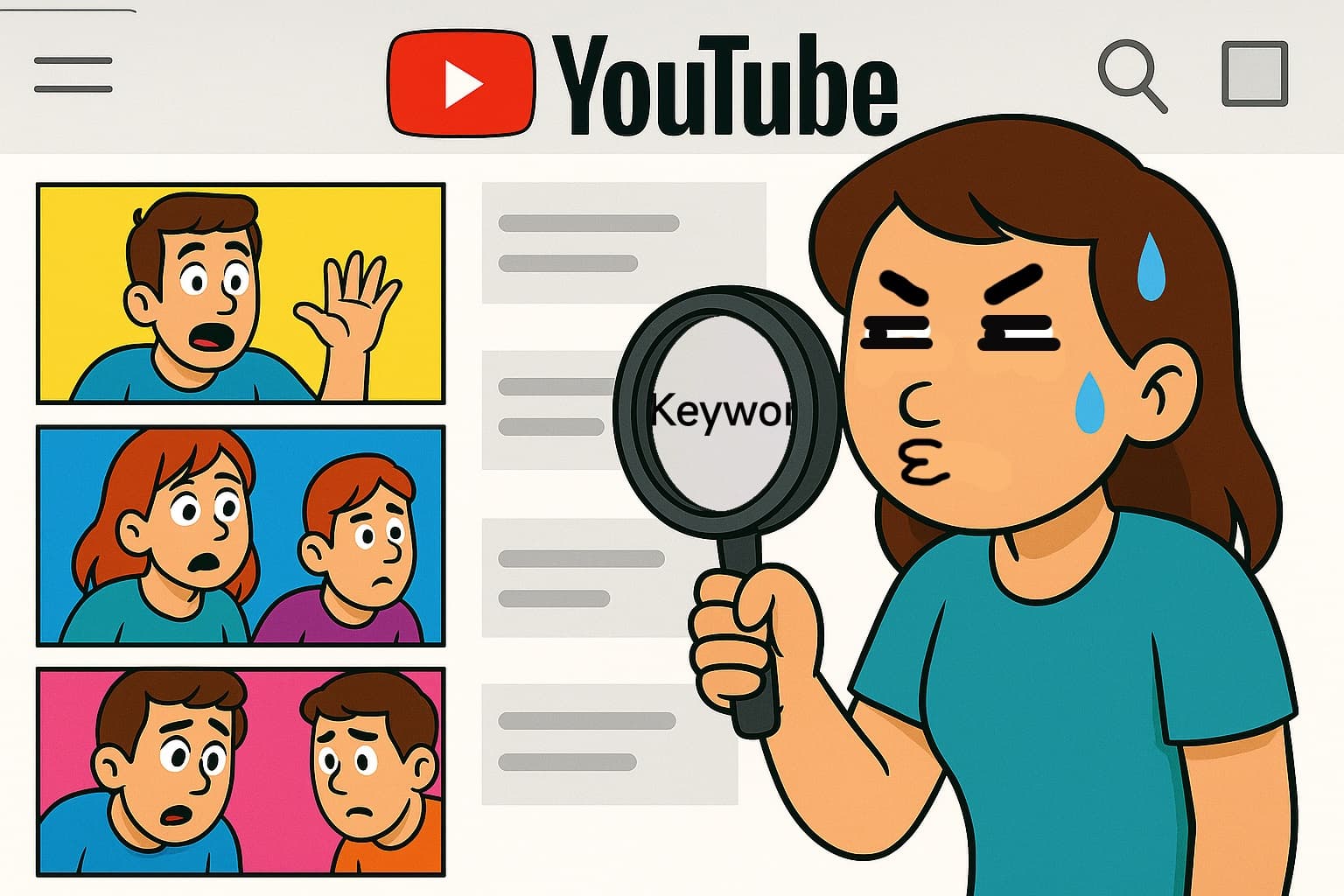
Their brain scans for keywords (or images of what they’re searching for), both in titles and thumbnails.
- Keyword or object – grabs attention.
- Title – delivers the promise.
- Thumbnail – seals the trust.
It’s the reverse of how the Home Feed, Mobile view, and Suggested Videos work.
There, it’s thumbnail → title → emotion → curiosity → click.
Here, it’s keyword → title → thumbnail → logic → trust → click.
The difference changes everything.
If your keyword doesn’t hit the intent, nothing else matters — your video never even enters the decision zone.
And if your thumbnail looks sloppy or untrustworthy,
the viewer assumes your answer is too.
Because in Search, the thumbnail isn’t decoration — it’s a promise.
So don’t try to be exciting.
Try to look promising.
Search doesn’t care who you are — only what you solve.
4️⃣ How Viewers Actually Decide
Let’s replay what really happens — not the theory, but the reflex:
- They search a term.
- Their eyes dart through results, hunting for a matching phrase (or object) in titles and thumbnails.
- One title hits the exact problem they typed
- They glance at the thumbnail to check if it looks relevant and trustworthy.
- They click, skim the first seconds, maybe fast-forward.
- If it’s not what they need — they’re gone.
And then they repeat the process.
It’s mechanical. Efficient. Ruthless.
Not because viewers are cold
Because they’re are not exploring — they’re trying to save time.
You’re not competing for attention —
you’re competing for precision.
That’s what makes the Search view brutal — but fair.
It rewards relevance, not noise.
5️⃣ How to Use This Page
This test helps you see whether your title and thumbnail align with search intent, not just aesthetics.
Try this:
- Enter a search term.
Pretend you’re the viewer typing that phrase.
Don’t think like a creator — think like someone trying to solve a problem fast.
- Check your title.
Does it match why someone would search this term?
Does it promise to solve their problem quickly or clearly?
- Check your thumbnail.
Does it look relevant and promising?
Would someone scanning ten results stop here with confidence?
Remember — in the search view, you don’t need to stand out.
You just need to look like the right answer.
Because at this stage, “different” isn’t better —
reliable is.
6️⃣ From Precision to Trust
Search is cold traffic — but it’s honest traffic.
These viewers don’t click because they’re curious;
they click because they believe you might save them time, or solve their problem.
That’s why your first impression here matters more than anywhere else.
If you deliver exactly what they came for — clearly, fast, and without fluff —
you’ve just earned something algorithms can’t fake: trust.
And when that happens, they remember.
Next time they see your face or title on the home feed,
you’re no longer a stranger.
You’re the one who helped.
That’s how a single search view becomes the start of belief.
The Search View isn’t about grabbing attention.
It’s about earning it —one keyword at a time.